For many first-time buyers, homeownership can feel like a goal that’s always a few years away. Saving for a down payment takes time, and rising home prices and other costs can make it tempting to keep renting while you save.
But buying your first home may not be as far away as it feels.
At Benson & Mangold, we believe understanding your options is one of the most important parts of the homebuying process. Two choices in particular can help shorten the path to homeownership: considering a starter home and exploring down payment options beyond 20%.
How Long Does It Really Take To Buy?
Before looking at ways to shorten the timeline, it helps to understand how the numbers work.
“Breaking even” is the point when the cost of owning a home has roughly caught up with what you would have spent renting. After that point, owning can become more financially advantageous than renting.
According to Zillow, buyers should consider not only when they can afford to purchase, but also how long they would need to stay in the home for owning to make more financial sense than renting.
For a mid-priced home with a 20% down payment, Zillow estimates it can take approximately 8.5 years to save for the down payment, followed by another 6.2 years to reach the break-even point.
That’s nearly 15 years in total.
But that timeline is based on two assumptions: purchasing a mid-priced home and putting 20% down.
Change either of those factors, and the timeline can become significantly shorter.
1. Consider a Starter Home
A starter home generally falls within the lower third of home prices in a particular market. It could be a condominium, townhome, or a smaller or older single-family home.
For first-time buyers, starting smaller can make a meaningful difference.
A more affordable home means you may need to save less for your down payment, which can shorten the amount of time it takes to become a homeowner.
Zillow found that, nationwide, it takes about 7.2 years to save for and reach the break-even point on a starter home — roughly half the time compared with the nearly 15-year timeline for a mid-priced home.
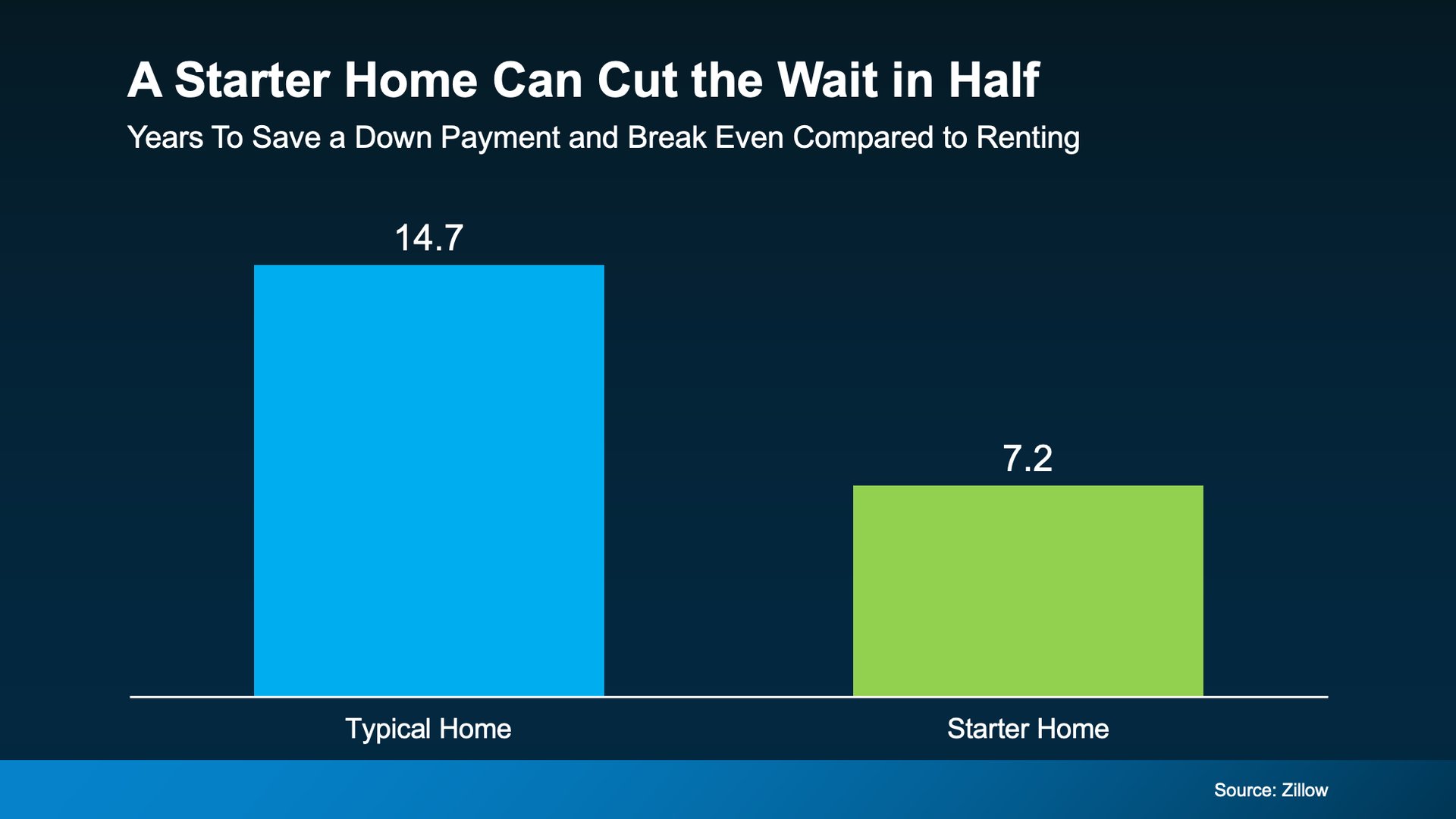
That 7.2 years breaks down to approximately 4.6 years to save for the down payment and 2.6 years to reach the break-even point.
Of course, every market is different. Home prices, rents, inventory, and financing options vary from one community to another — including throughout Maryland’s Eastern Shore.
The important takeaway is that your first home doesn’t have to be your forever home.
A starter home can provide a way to enter the market, begin building equity, and work toward your next move over time.
2. You May Not Need 20% Down
One of the most common misconceptions among first-time buyers is that you need a 20% down payment to purchase a home.
In reality, many buyers put down considerably less.
According to the National Association of REALTORS®, the median down payment for first-time buyers is 10%.
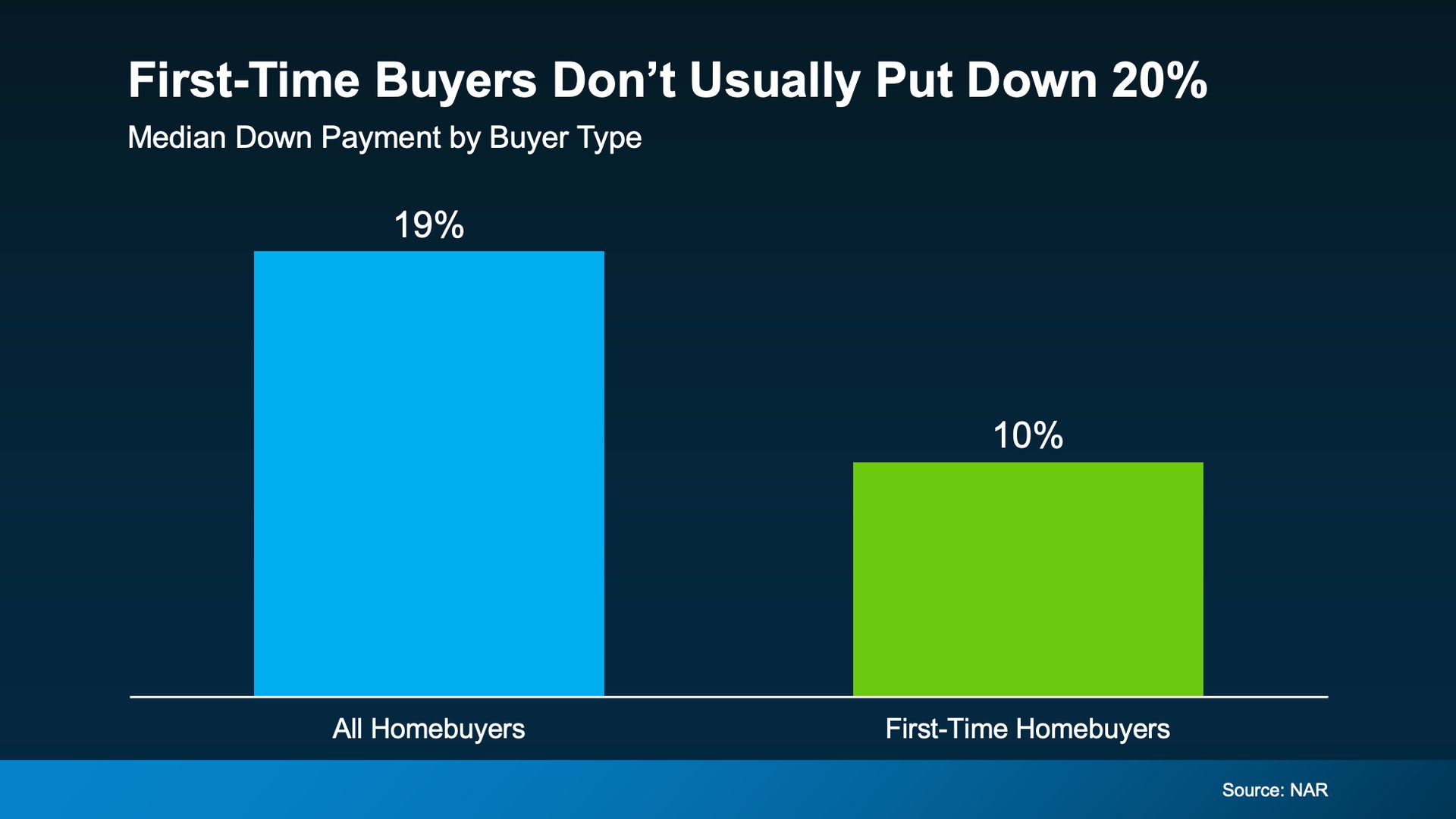
Depending on the loan program and your individual circumstances, some conventional loans allow down payments as low as 3%, while FHA loans can require as little as 3.5%. Eligible veterans and some buyers purchasing in qualifying rural areas may also have access to zero-down financing options.
There may also be assistance available to help with upfront costs.
Down Payment Resource identifies thousands of homebuyer assistance programs across the country, and some buyers may be able to combine multiple eligible sources of assistance.
That means the path to homeownership may involve more options than you realize.
A lower price point, a smaller down payment, and available assistance can work together to bring your timeline forward — potentially by years.
Your First Home Doesn't Have To Be Your Forever Home
Buying your first home is a personal decision, and there isn't one strategy that works for everyone. Your budget, goals, lifestyle, and how long you plan to stay in a home all matter.
But if you've been waiting because homeownership feels too far away, it may be worth looking at the numbers from a different perspective.
A starter home could get you into the market sooner. A down payment below 20% could reduce the amount you need to save. And understanding your options can help you determine what may actually be possible.
At Benson & Mangold, we've been helping buyers navigate the Eastern Shore real estate market for generations. If you're thinking about buying your first home, we're here to help you understand the local market, explore your options, and determine what makes sense for you.
Ready to see what could fit your budget? Contact our Agents!