One of the biggest concerns many buyers have right now is simple: “What if I buy a home and prices fall afterward?”
With constant headlines about the housing market, it’s understandable to feel cautious before making such a major financial decision. But it’s important not to focus too heavily on the small number of markets experiencing temporary price dips today.
When you look at the bigger picture, home values have historically increased over time.
What History Tells Us
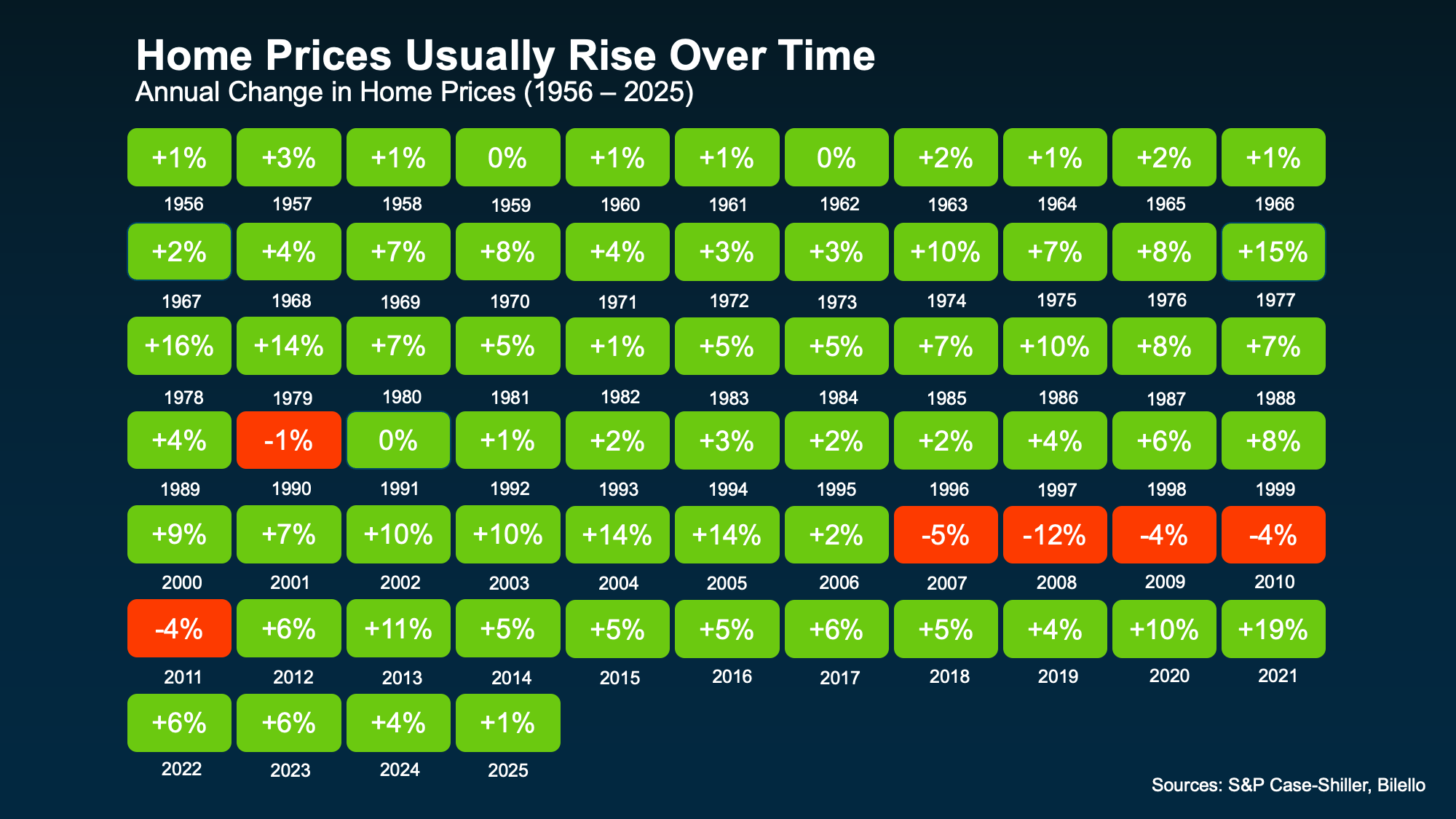
Data from sources like Case-Shiller and Bilello shows that, dating back to the 1950s, home prices have generally remained steady or appreciated year after year.
The major exception was the housing crash in the late 2000s. Outside of that period, real estate has consistently shown long-term growth.
That’s an important reminder many headlines overlook: while short-term fluctuations can happen, long-term trends matter far more.
Why Home Values Typically Increase
There are several key reasons home prices tend to rise over time:
- Housing demand remains constant. Life changes like new jobs, growing families, downsizing, and relocations mean people will always need homes.
- Inventory is still limited. Although the number of homes for sale has improved, there still aren’t enough homes available nationally to meet buyer demand.
- Inflation plays a role. Like most goods and services, home prices naturally rise over time as the cost of living increases.
What This Means for Buyers
It’s easy to become focused on what could happen to home prices over the next few months, especially for first-time buyers making a major financial commitment. But historically, real estate has rewarded long-term ownership.
That doesn’t mean every market rises every single year. Real estate is local, and short-term shifts are normal. Some areas may experience brief slowdowns or small declines.
Historically, though, those dips have tended to be temporary.
That’s one reason experts often recommend buying only if you plan to stay in the home for several years — typically at least five. A longer time horizon gives homeowners a better opportunity to build equity and benefit from appreciation over time.
As home values rise, so can your overall net worth, helping create long-term financial stability and wealth.
The Bigger Picture
Buying a home isn’t about perfectly timing the market. It’s about finding the right opportunity for your lifestyle, goals, and future plans.
Home prices have a long history of appreciating over time, which is why real estate is often considered a strong long-term investment.
Of course, buying a home should only happen when it makes sense for your personal situation and timeline. But for buyers feeling uncertain, understanding the long-term trends can provide reassurance and confidence moving forward.