
If you’re waiting for mortgage rates to drop significantly before buying a home, you may be waiting longer than you think.
While rates remain higher than many buyers would like, there’s an important factor working in today’s market that’s actually helping keep them from being even higher: the mortgage rate spread.
Understanding the spread can help put today’s mortgage rates into perspective—and give you a clearer picture of where rates may go from here.
The Connection Between Mortgage Rates and the 10-Year Treasury
Mortgage rates don’t move independently. They tend to follow the 10-year Treasury yield, which reflects investor expectations about the economy, inflation, and future interest rates.
While the relationship isn’t exact and other factors influence mortgage rates, the two have generally moved closely together for more than 50 years.
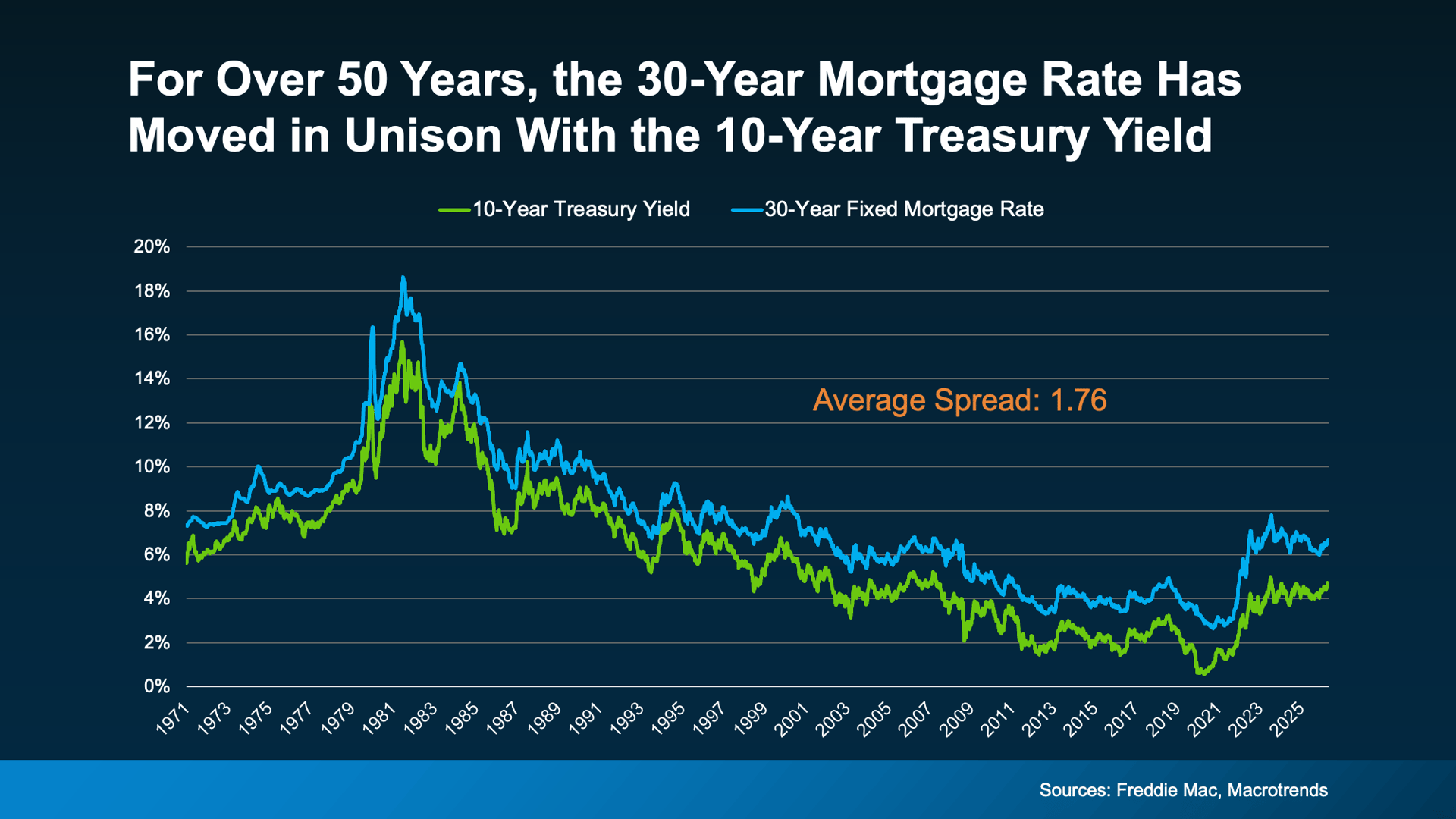
The difference between the 10-year Treasury yield and mortgage rates is known as the spread.
Historically, that spread has averaged about 1.76 percentage points. When the spread is wider, mortgage rates tend to be higher than the Treasury yield would otherwise suggest. When it narrows, mortgage rates move closer to the Treasury yield.
Why Rates May Not Fall Dramatically
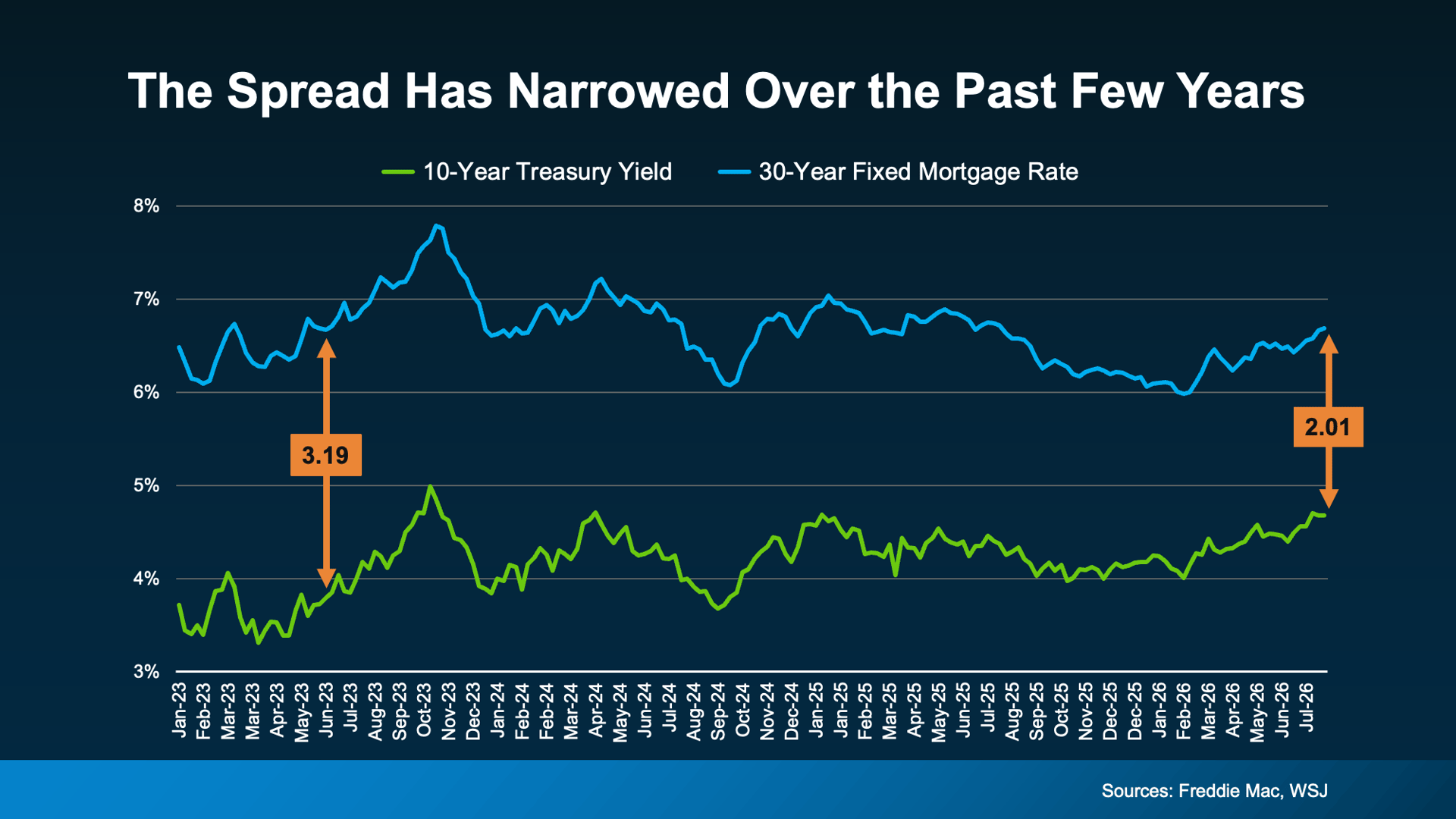
Over the past few years, the spread became unusually wide as economic uncertainty pushed it as high as 3.19 percentage points in 2023.
Since then, the spread has narrowed considerably. Today, it’s around 2.01 percentage points, much closer to its long-term average.
That’s good news for today’s buyers.
A narrower spread means mortgage rates are lower than they would have been if those wider spreads were still in place. However, it also means there may be less room for rates to fall simply because of further improvement in the spread.
The Spread Is Already Helping Keep Rates Lower
To see how much the spread matters, consider a 10-year Treasury yield of 4.68%:
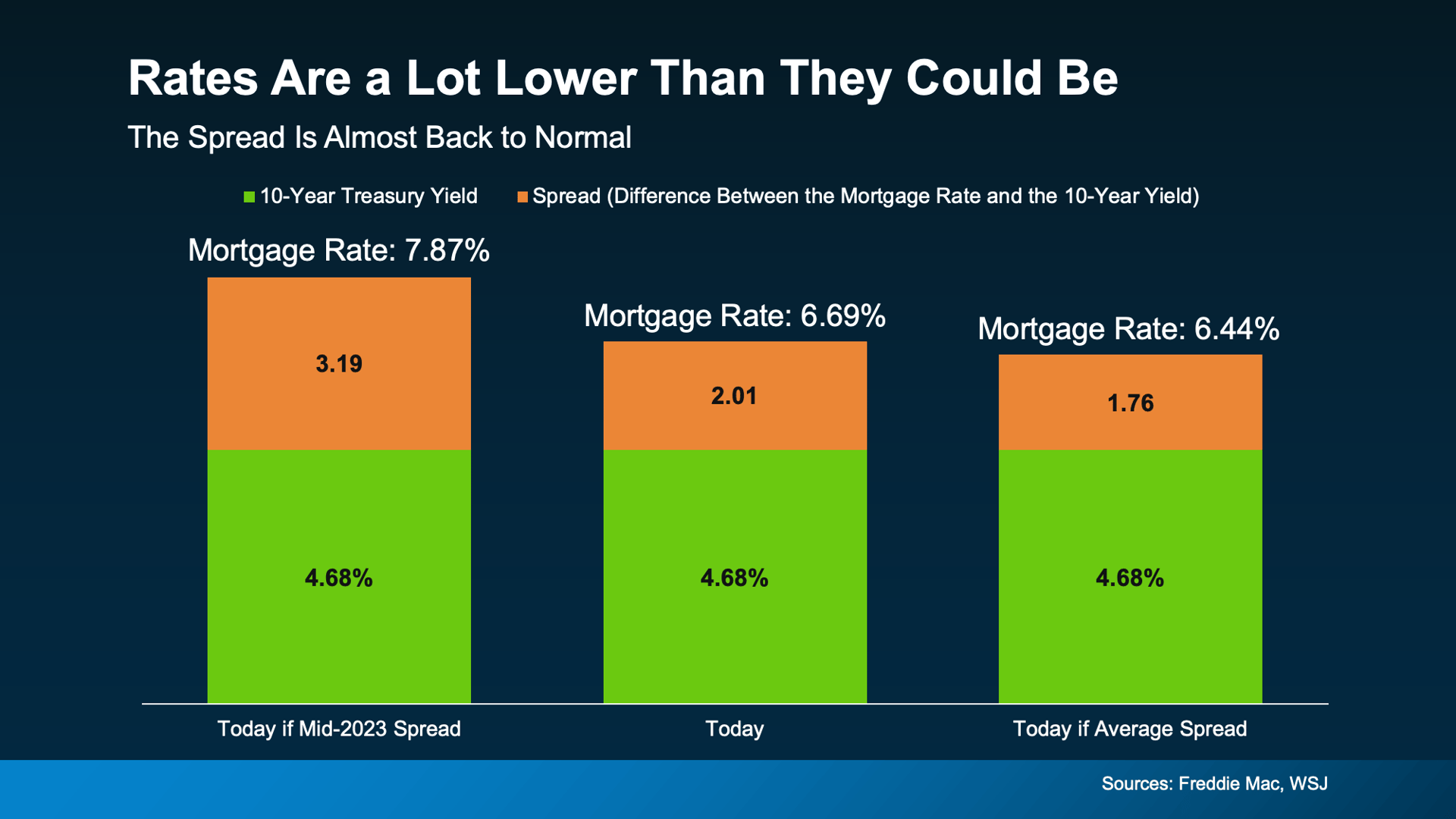
- 2023-level spread: Mortgage rates could be approaching 8%.
- Current spread: Mortgage rates are closer to 6.69%.
- Long-term average spread: Mortgage rates would be around 6.5%.
That means much of the potential improvement from a narrowing spread has already occurred.
As Logan Mohtashami, Lead Analyst at HousingWire, put it:
“Mortgage spreads being better in 2026 is the housing hero story of the year.”
The takeaway? The same narrowing spread that’s helping keep mortgage rates from approaching 8% is also one reason we shouldn’t expect rates to suddenly drop dramatically.
What Does This Mean for Buyers?
It’s easy to focus on the mortgage rate you wish you had. But it’s also important to understand the bigger picture.
Today’s rates may not be ideal, but they’re better than they could have been. And waiting indefinitely for a major rate drop may not be the best strategy if you’ve found a home that fits your needs and budget.
Your decision to buy should take into account more than just the interest rate. Your budget, home prices, available inventory, long-term plans, and overall financial situation all matter.
The Bottom Line
Mortgage rates are influenced by many factors, but the spread between mortgage rates and the 10-year Treasury yield is an important piece of the puzzle.
The good news is that the spread has improved significantly, helping keep rates lower than they otherwise might be. The trade-off is that there may be less room for rates to fall further based solely on spread improvement.
If you’re considering a move, talk with a local lender about what today’s rates could mean for your monthly payment and buying power. When you’re ready to explore your options on Maryland’s Eastern Shore, Benson & Mangold is here to help.