

Before putting your home search on pause for the winter, you may want to take another look. Although spring is often seen as peak buying season, new data shows January could be the most advantageous time for buyers looking to maximize their budget.
It may come as a surprise—here’s why January deserves serious consideration.
1. Seasonal Pricing Often Favors Buyers
LendingTree reports that January is the most affordable month to purchase a home, and there’s good reason behind it. Price-per-square-foot figures tend to be among the lowest of the year during this time. Once spring arrives, demand increases—and prices often follow. This pattern has held true across years of housing market data.
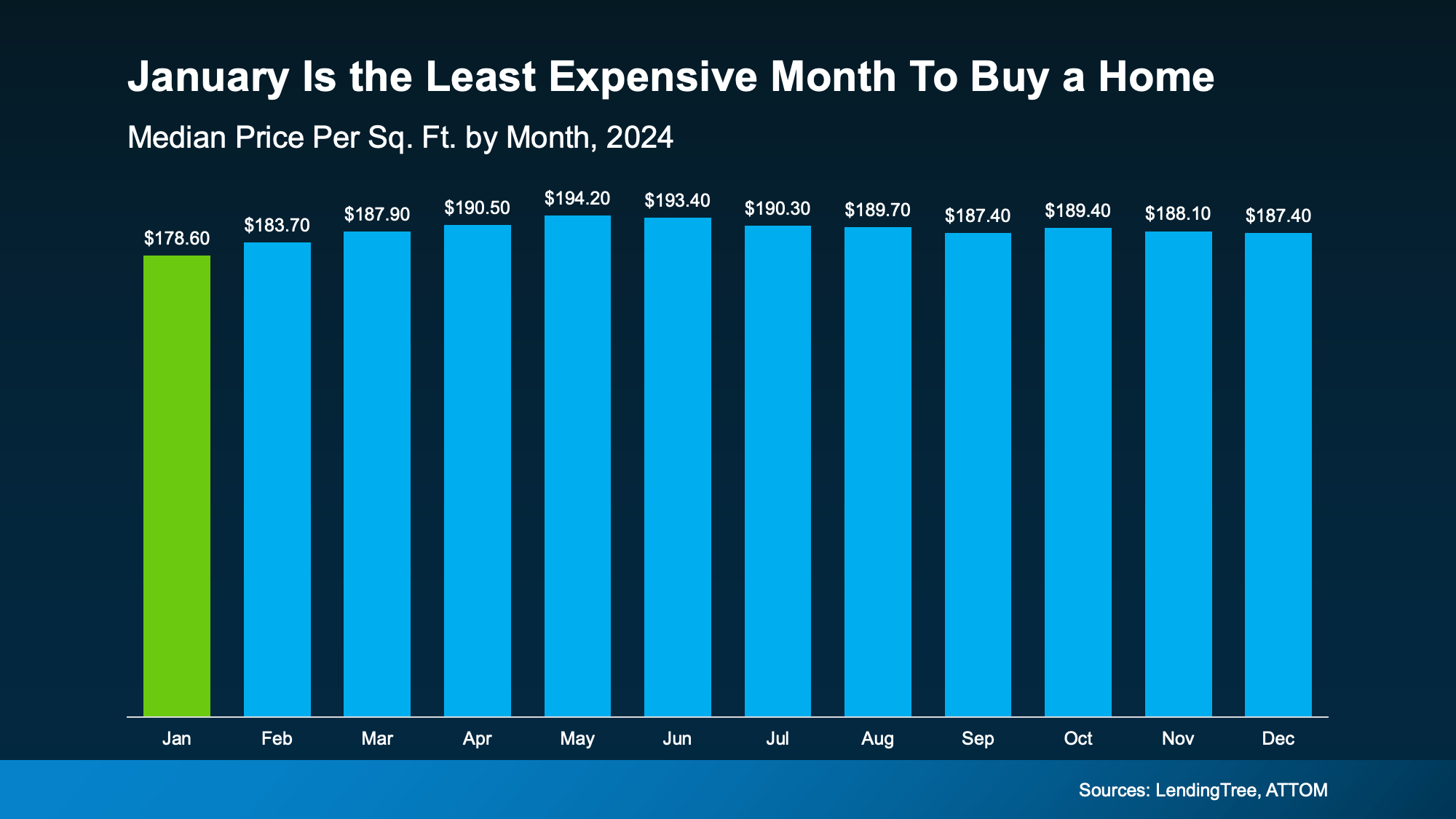 But how much of a difference does that really make? Looking at the numbers, buyers who closed on a typical 1,500-square-foot home in January paid roughly $23,000 less than those who purchased in May, according to the most recent full year of data. This trend has remained fairly consistent over time (see chart below).
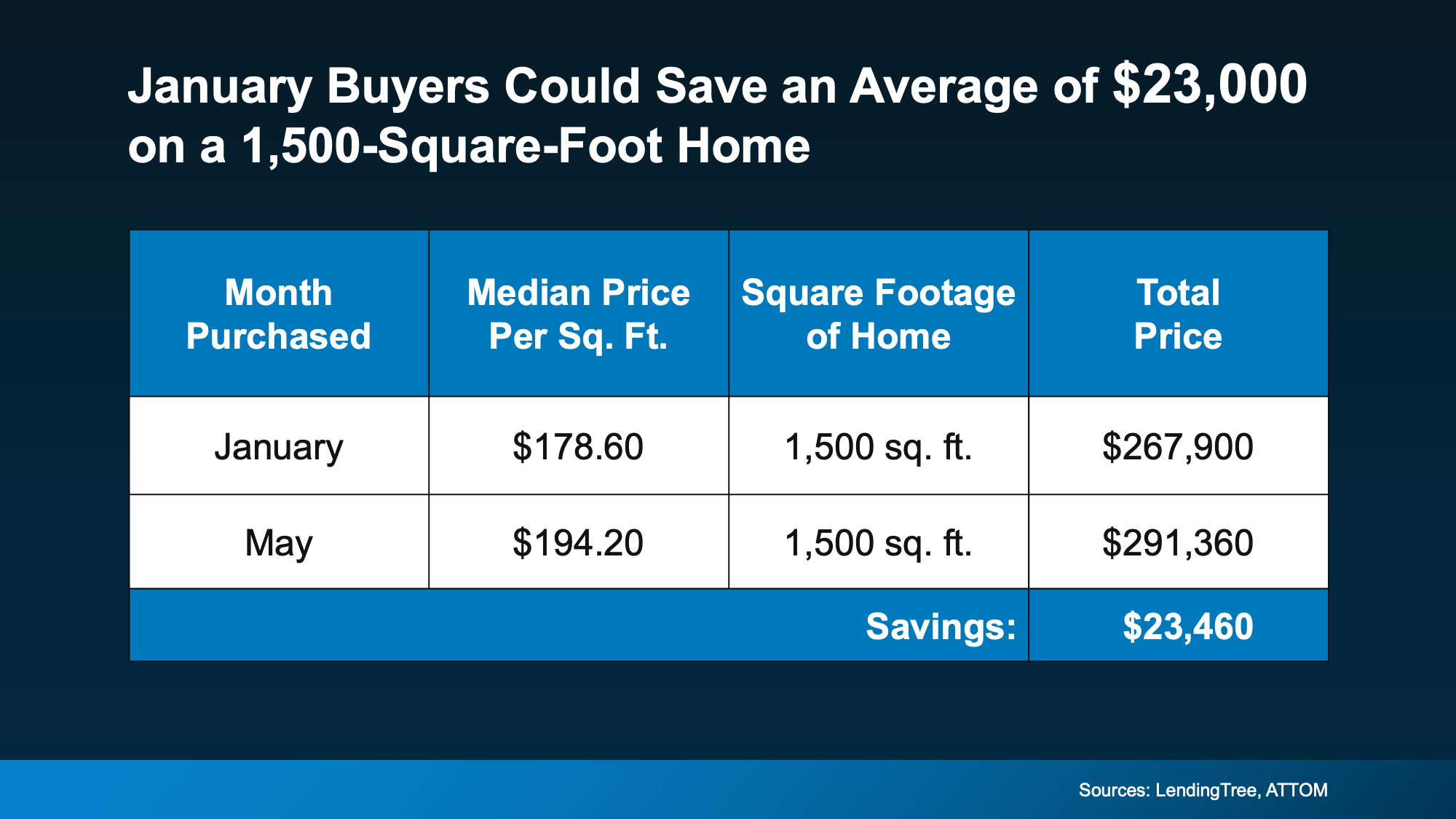 Of course, the exact savings depend on the price point, size, and type of home you choose. Still, the pattern is clear: for today’s buyers, the potential savings can be significant, particularly as affordability continues to be tight for many households.
2. Less Competition and More Motivated Sellers
Why do buyers tend to see more savings during the winter months? It’s straightforward. Winter is typically one of the slowest times in the housing market, as many buyers and sellers choose to wait until spring. That slowdown can lead to:
-
Fewer competing buyers
-
Less pressure from bidding wars
-
Greater flexibility from sellers who are motivated to make a deal
With fewer buyers in the market, you have more time to browse thoughtfully.
Winter doesn’t just reduce the number of buyers—it also highlights which sellers are truly motivated. With fewer people actively house hunting during the colder months, sellers who need to move are often more open to negotiation. As Realtor.com explains:
“Less competition means fewer bidding wars and more power to negotiate the extras that add up: closing cost credits, home warranties, even repair concessions. . . these concessions can end up knocking thousands of dollars off the price of a home.”
This can range from price reductions to closing cost assistance, flexible timelines, and more. While it doesn’t guarantee discounts on every home, it does increase the likelihood that your offer will be taken seriously and that there’s room for negotiation.
Is It Worth Waiting Until Spring?
The takeaway is simple: a slower winter market often creates better opportunities for buyers. With less competition and reduced urgency, it’s easier to find the right home at the right price.
Spring typically brings more buyers, higher prices, and added stress. While the timing of your move is a personal choice, January offers clear advantages—fewer buyers, potentially lower prices, and more motivated sellers.
If you’d like this localized to Maryland’s Eastern Shore or tied into a call-to-action for your agents, I can tailor it further.
Bottom Line
If you’ve been thinking about taking the next step, this season might give you more opportunity than you think.
Curious what buying in January could look like for you? Let’s review your numbers and explore the homes currently available in our area. The agents at Benson & Mangold are here to help guide you every step of the way.
The information contained, and the opinions expressed, in this article are not intended to be construed as investment advice. Keeping Current Matters, Inc. does not guarantee or warrant the accuracy or completeness of the information or opinions contained herein. Nothing herein should be construed as investment advice. You should always conduct your own research and due diligence and obtain professional advice before making any investment decision. Keeping Current Matters, Inc. will not be liable for any loss or damage caused by your reliance on the information or opinions contained herein.