Concerns about a housing crash continue to make headlines, especially for buyers who are hoping lower prices will make homeownership more affordable. But what do the latest housing experts actually expect?
The newest Fannie Mae Home Price Expectations Survey (HPES) offers some perspective. The quarterly survey, conducted in partnership with Pulsenomics, asks more than 100 housing experts, economists and real estate professionals about their expectations for national home prices.
The latest results point to continued home price growth through 2030—not a national housing crash.
What Are Experts Expecting for Home Prices?
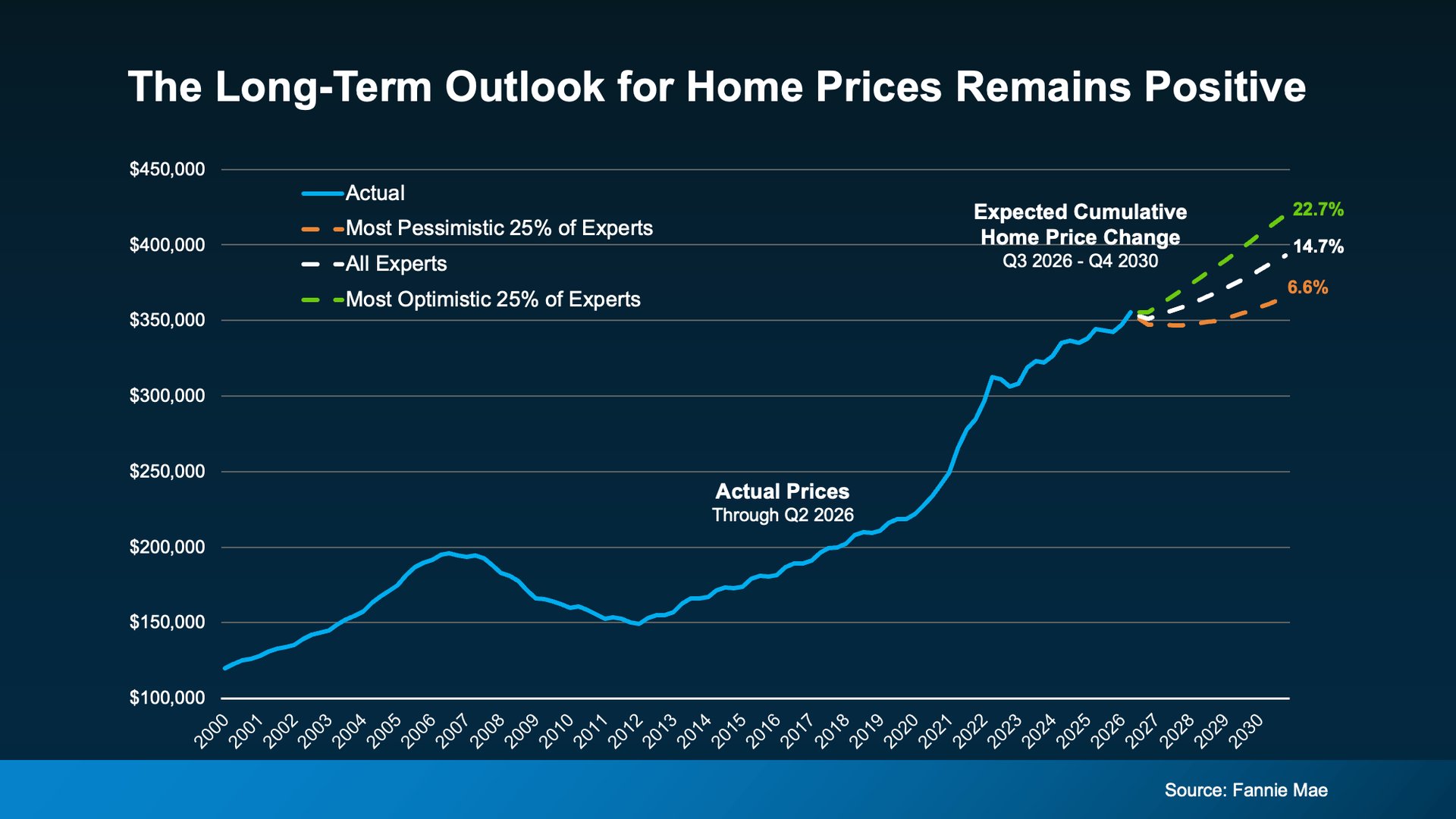
According to the Q3 2026 survey, the panel expects national home prices to increase each year through 2030.
The annual forecasts are:
- 2026: +2.5%
- 2027: +2.2%
- 2028: +2.7%
- 2029: +3.1%
- 2030: +3.3%
Taken together, the panel's forecast represents approximately 14.6% cumulative home price growth through 2030.
Source: Fannie Mae/Pulsenomics, Q3 2026 Home Price Expectations Survey.
The important distinction is that this is a national forecast, not a prediction for every individual market or property. Home values can perform differently from one community to another depending on inventory, demand, local economic conditions and other factors.
For buyers and sellers on Maryland's Eastern Shore, local market data remains essential when evaluating what these national trends mean for a specific property.
There Is Still Uncertainty Around the Forecast
While the overall forecast calls for continued price growth, the experts surveyed do not all have the same outlook.
In the Q3 survey, 114 panelists responded to questions about the long-term outlook for home prices. About 42% described the risk as balanced, while approximately 40% saw more downside risk and 18% saw more upside risk. Even among those identifying downside risk, however, the average cumulative home value expectation through 2030 remained positive at 12.3%.
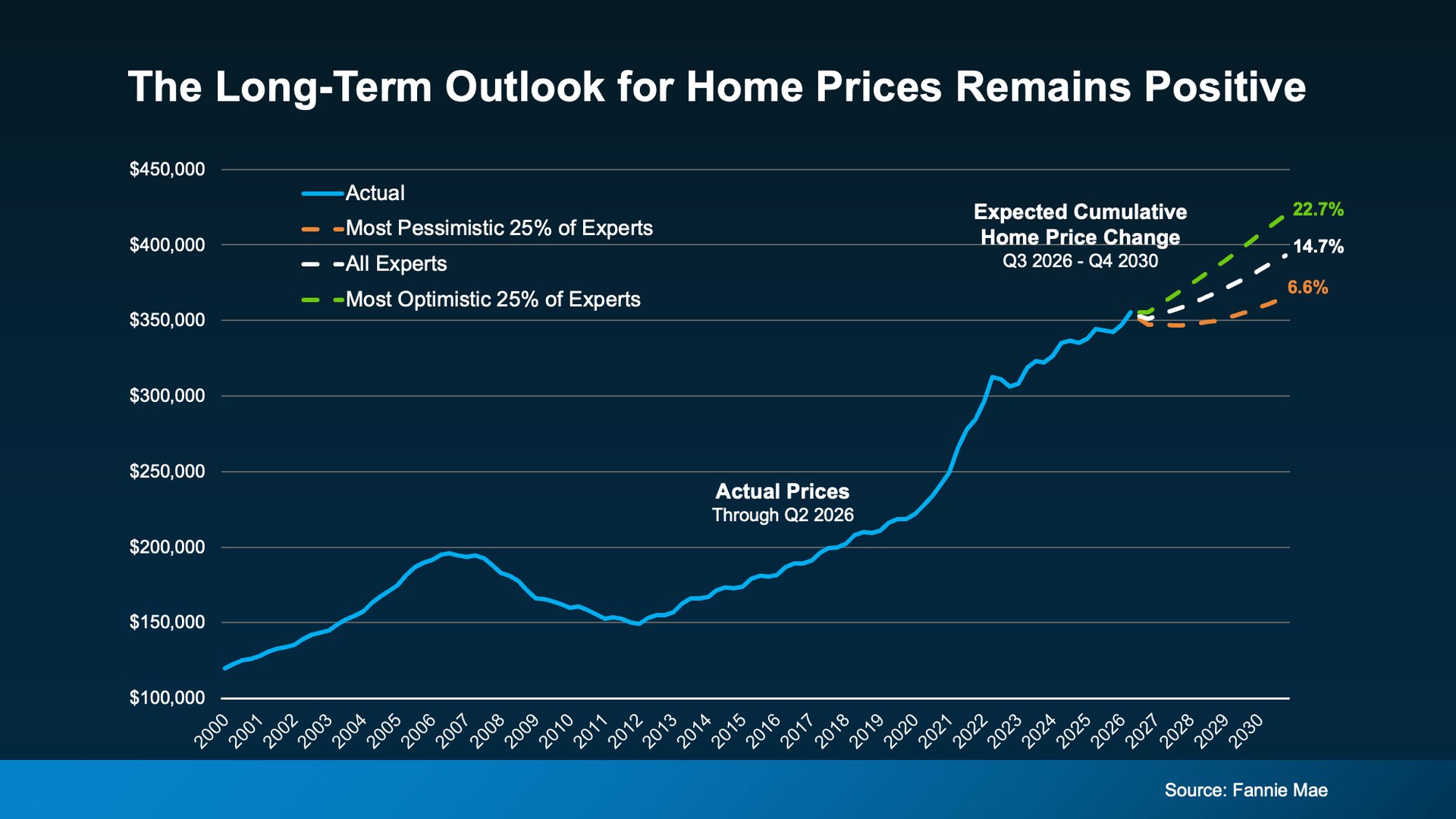
Source: Fannie Mae/Pulsenomics, Q3 2026 Home Price Expectations Survey. Forecasts represent national expectations and are not guarantees of future home values.
The range of expectations is a reminder that no housing forecast is certain. Economic conditions, mortgage rates, housing supply and consumer demand can all affect where the market goes next.
How Does This Compare With Earlier Forecasts?
The latest numbers also show that experts have become somewhat more cautious about the pace of future price growth.
Compared with the outlook from a year ago, expectations for 2027 through 2029 have moderated, even though the forecast remains positive. Pulsenomics reports that the panel's cumulative expectation for those three years declined from 10.3% in the Q3 2025 survey to 8.2% in Q3 2026.
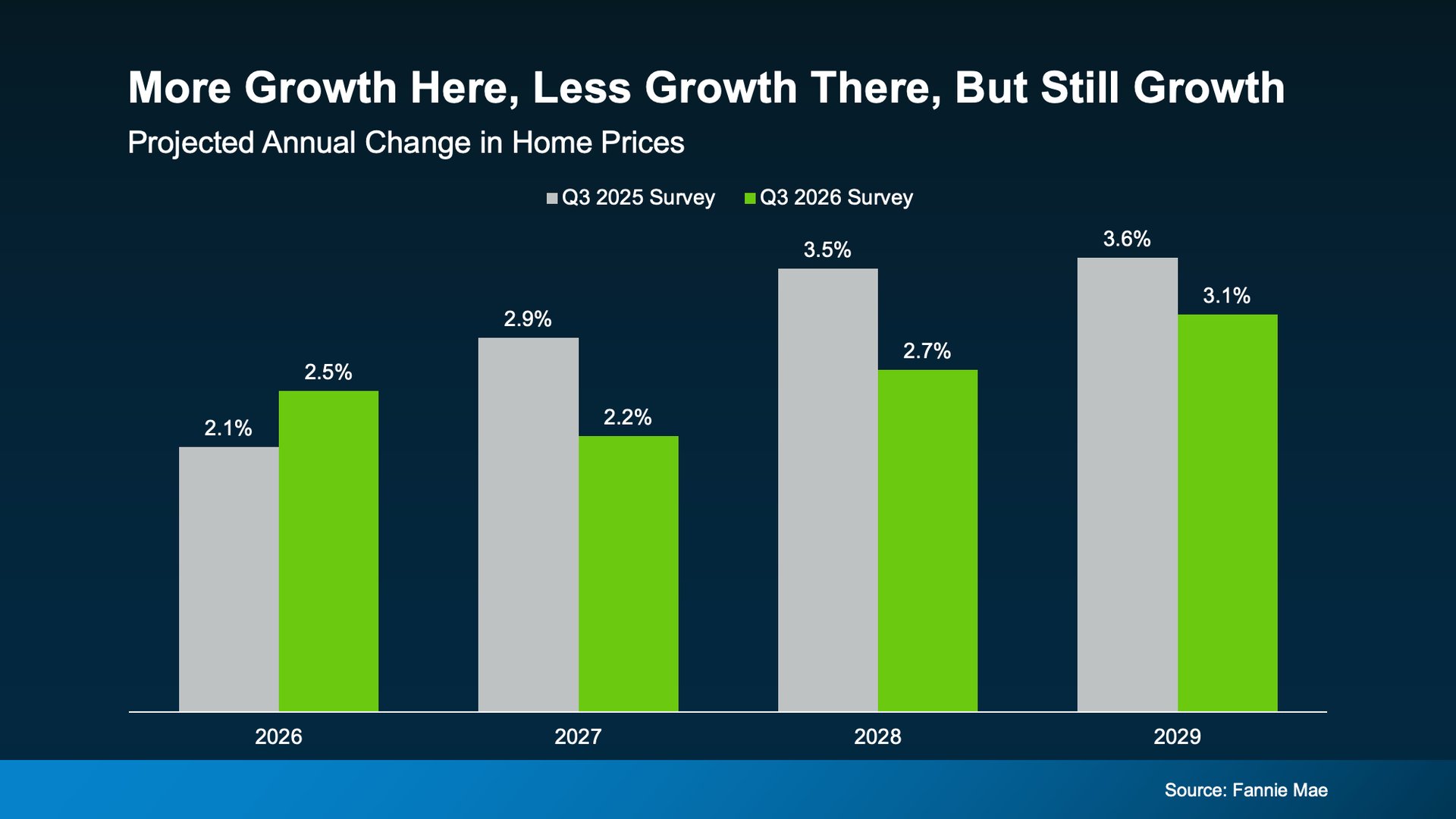
Source: Fannie Mae/Pulsenomics Home Price Expectations Survey.
A slower rate of appreciation is different from falling home prices. The latest forecast suggests a market that is moving toward a more moderate pace of growth rather than one experiencing a broad national decline.
What Could This Mean for Buyers and Sellers?
National forecasts are useful for understanding the broader housing market, but they should not be used to predict exactly what a particular home will be worth several years from now.
For buyers, waiting for a significant nationwide price decline may not necessarily produce the outcome they expect. If prices continue to appreciate, even at a more moderate pace, the cost of a comparable home could be higher in the future.
For sellers, the forecast is another reminder that pricing should be based on current local market conditions, rather than national headlines alone.
Illustration only. Applying the national five-year price-growth forecast to a hypothetical $400,000 home would result in an estimated value increase of roughly $58,000. Actual home values will vary by property and market.
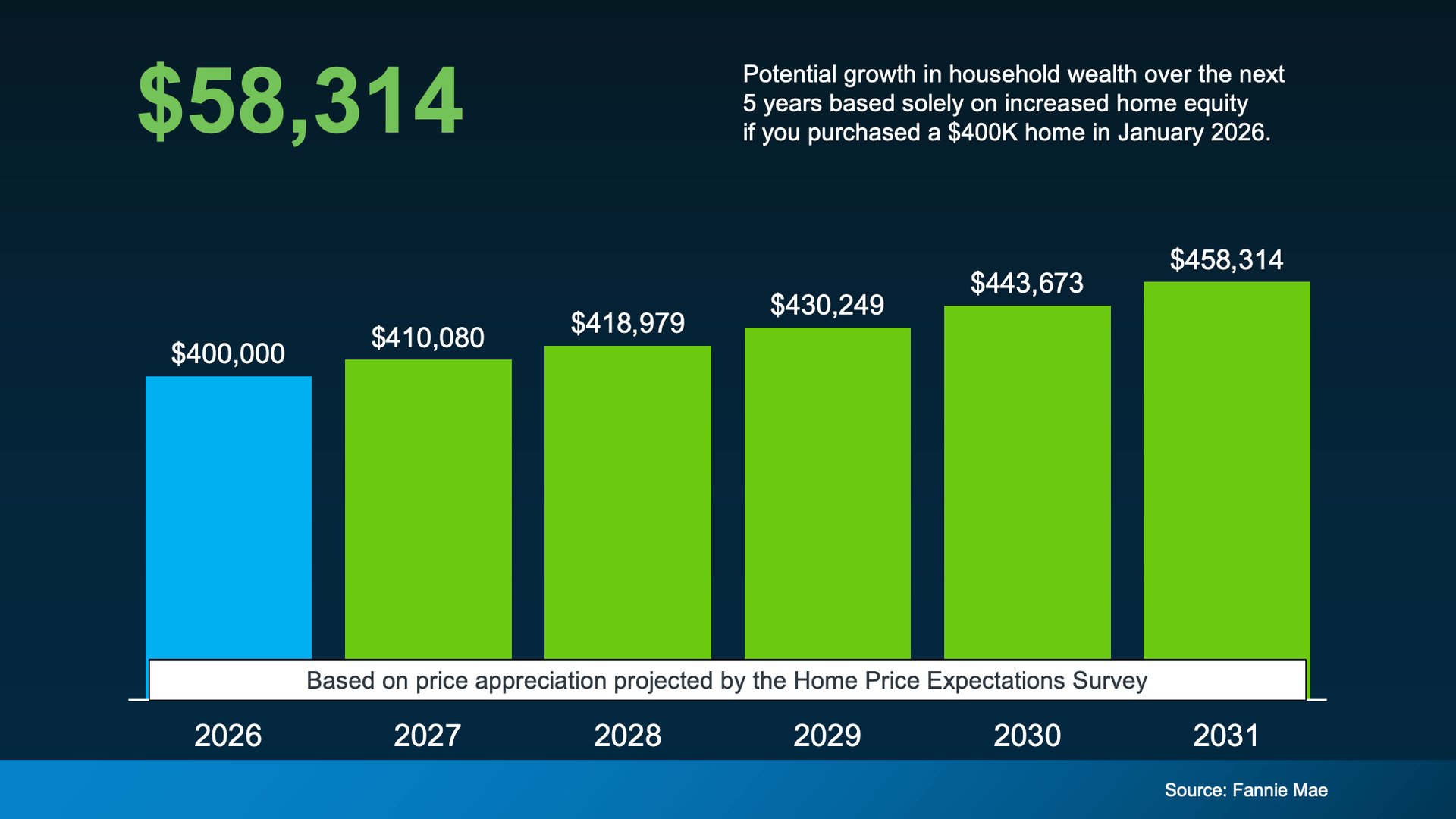
Home price appreciation is not guaranteed, and actual equity depends on the individual property, purchase price, improvements, financing, market conditions and other factors.
National Trends Are Only Part of the Story
For Maryland's Eastern Shore, the national outlook is just one piece of the puzzle.
Local inventory, buyer demand, property type, neighborhood, pricing and recent comparable sales can all have a meaningful impact on how a particular home performs.
That's why working with a real estate professional who understands the local market can be helpful when you're deciding whether to buy, sell or simply keep an eye on the market.
The Bottom Line
The latest Fannie Mae Home Price Expectations Survey does not point to a national housing crash. Instead, the panel expects home prices to continue increasing through 2030, although at a more moderate pace than the rapid appreciation seen during some recent years.
Of course, national forecasts don't tell the whole story—especially in a market as local as real estate. If you're considering a move on Maryland's Eastern Shore, the most useful next step is understanding what's happening in your specific market and price range.
Benson & Mangold has been helping buyers and sellers navigate Maryland's Eastern Shore since 1967.
Explore the Eastern Shore market with Benson & Mangold →
Sources: Fannie Mae/Pulsenomics, Q3 2026 Home Price Expectations Survey; Pulsenomics Q3 2026 survey recap. Forecasts are estimates and are subject to change. They should not be interpreted as guarantees of future home values or investment advice.